Cardiovascular disease is still among the major causes of mortality in the world. One of the strongest remedies to the matter of decreasing the number of long-term health risks is to improve cardio fitness. There is solid scientific data that cardiorespiratory fitness is strongly associated with the reduction of the risk of heart disease and premature death (Ross et al., 2023). The best exercise for cardio fitness is the most suitable to strengthen the heart muscle, delivery of oxygen, and endurance is boosted safely with time.
- What Is Cardio Fitness?
- Why Improving Cardio Fitness Is Essential for Heart Health
- How Much Cardio Exercise Do You Need?
- Best Exercise for Cardio Fitness: Evidence-Based Options
- Which Exercise Is Truly the Best?
- How to Build a Balanced Cardio Routine
- Signs Your Cardio Fitness Is Improving
- Safety Considerations
- Conclusion
- Frequently Asked Questions
- References
This evidence-based guide clarifies the concept of cardio fitness, the most effective exercises, and how to make a workout routine sustainable with the help of the current research by 2023-2025.
What Is Cardio Fitness?
Cardio fitness such as cardiorespiratory fitness is the measurement of the efficiency of the partnership between the heart, lungs and muscles in the case of prolonged activity. It is usually measured in terms of maximal oxygen uptake, also referred to as VO2 max. The greater the VO2 max, the lesser the risk of cardiovascular and overall mortality (Ross et al., 2023).
Aerobic exercise makes your heart stronger when you practice it on a regular basis. With every beat it pumps more blood. Blood vessels in your body are made more flexible and the distribution of oxygen is enhanced in the body. These modifications will increase stamina and minimize pressure in day to day chores. The U.S. Department of Health and Human Services (HHS, 2024) also confirms that regular aerobic exercise has a beneficial effect on blood pressure, insulin sensitivity, and lipids. Through all these, the risk of cardiovascular disease is decreased.

Why Improving Cardio Fitness Is Essential for Heart Health
Low cardiorespiratory fitness has become a risk factor to cardiovascular disease on its own. The publication by Circulation emphasizes the fact that fitness levels are very reliable predictors of long-term health outcomes (Ross et al., 2023).
Improved cardio fitness supports:
- Better blood pressure regulation.
- Reduced LDL cholesterol.
- Better toleration to glucose.
- Reduced systemic inflammation.
- Improved endothelial functioning.
The American Heart Association attests to the fact that regular aerobic workouts decrease the risk of heart attack and stroke (AHA, 2024). Even a moderate increase in fitness is associated with health benefits.
How Much Cardio Exercise Do You Need?
It is advised by current guidelines that:
- Moderate intensity aerobic activity, at least 150 minutes per week.
- Or 75 minutes per week of vigorous-intensity.
- Or a combination of both
The recommendations are the ones the American Heart Association and the federal guidelines recommend (AHA, 2024; HHS, 2024). Moderate intensity entails brisk walking or leisurely cycling. Vigorous intensity is running or fast cycling of which talking is hard. The muscle-strengthening activities must also be done at least twice a week to achieve optimum cardiovascular and metabolic health.
Best Exercise for Cardio Fitness: Evidence-Based Options
The selection of the best exercise for cardio fitness will be based on personal objectives, fitness status, and the health history. It has been scientifically determined that a variety of aerobic exercises can have a substantial positive impact on cardiovascular health in case of regular performance (HHS, 2024).
The most important thing is to choose an activity that increases the heart rate and involves a significant amount of large muscles without risk. Although there is no workout that is better than the rest, a number of them are regularly shown to have powerful clinical advantages. There is no greatest cardio fitness exercise. However, there are always several aerobic exercises, which are advantageous in clinical studies.
1. Brisk Walking
Brisk walking is available, safe and efficient. It increases the heart rate and does not overstrain the joints. Research indicates that moderate exercise helps a person decrease the risk of cardiovascular mortality (HHS, 2024). The process of walking enhances endurance; it also helps in long-term compliance. It can be the safest starting point especially to beginners or to older adults. It should be 30 minutes a day and at a rate that does not cause one to talk too slowly.
2. Running or Jogging
Running is an active aerobic exercise that accelerates the improvement of VO2 max. Even brief running is connected with the danger of cardiovascular mortality (Ross et al., 2023). Running enhances cardiac output and improves respiratory muscles. But novices need to advance step by step in order to minimize the risk of injury. Overuse injuries are prevented by wearing proper shoes, and taking recovery days.
3. Cycling
Cycling is healthy to the heart and reduces the stress on the joints. It is appropriate to those who have a knee or hip issue. It has been proven that cycling improves aerobic capacity and cardiometabolic markers (HHS, 2024). The resistance or speed can easily be adjusted to provide an intensity. The indoor stationary bicycling can be used as a solution when the weather is too difficult.
4. Swimming
Swimming conditions the whole body in terms of cardiovascular. Water resistance improves muscular work without putting the joints on strain. According to the American Heart Association, swimming enhances the effectiveness of the heart and lungs, as well as endorses the development of the muscles (AHA, 2024). Swimming is especially useful to people with arthritis or who have difficulty in mobility.
5. High-Intensity Interval Training (HIIT)
HIIT is an exercise with periods of intense exercise interspersed with periods of rest. It is highly time-efficient. Studies indicate that HIIT has a great effect on cardiorespiratory fitness exercise and insulin sensitivity (Ross et al., 2023). It might not however be suitable to laypersons not clearance by a doctor. Formal instructions minimize the risk and enhance safety.
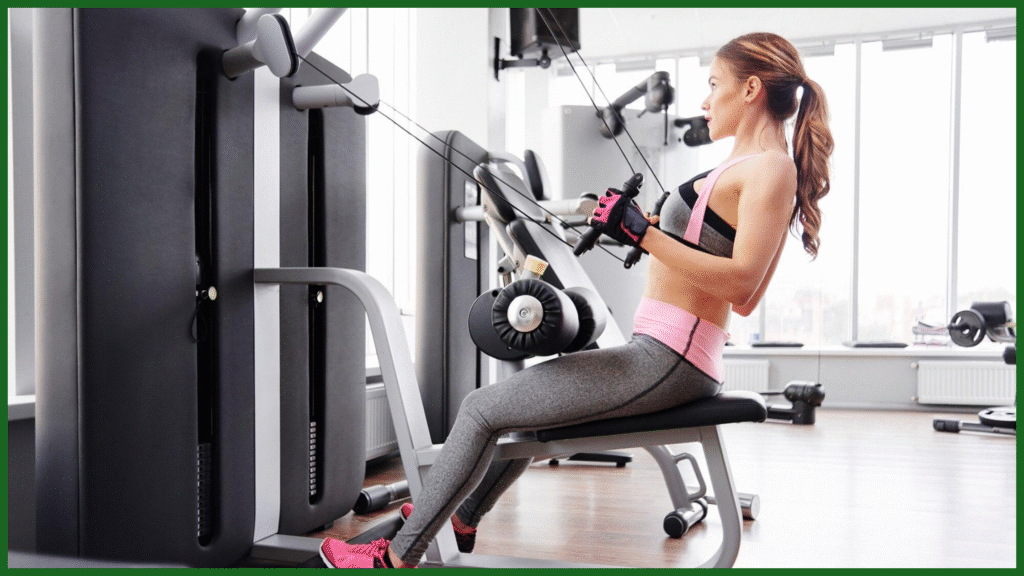
6. Rowing
Rowing involves the combination of upper and lower muscular groups. It gives good cardiovascular stimulus and little impact. Rowing enhances stamina, physical power and coordination. It also works as an effective cross-training of athletes.
Which Exercise Is Truly the Best?
No universally better choice exists in the best exercise to use in the best exercise for cardio fitness since long-term consistency and proper progression are more important than the type of exercise that is used. The existing physical activity recommendations note that total aerobic volume per week, rather than the type of activity, is more important in cardiovascular improvements (HHS, 2024).
The best predictor of sustainable benefits in heart health is adherence because consistent attendance results in quantified changes in endurance, metabolic capabilities and heart strength. They can be adjusted individually based on age, baseline fitness, medical history and lifestyle limitations so as to be safe and successful in the long-term and to minimize the risk of injury.
Key Takeaways:
- Regularity is better than opting to have the toughest exercise.
- The cardiovascular progress is achieved through total weekly aerobic volume (HHS, 2024).
- Exercises must increase the heart rate and use large muscles.
- HIIT, cycling, rowing, swimming, running, and brisk walking are good alternatives.
- The choice of the exercise must be in accordance with the medical conditions and fitness level.
- Progression and the recovery are gradual, which minimizes the risk of injuries.
- Regular exercises create lasting cardiac results.
How to Build a Balanced Cardio Routine
A cardio routine has to be structured, progressive, and sufficiently relaxing. A moderate and vigorous aerobic program, coupled with strength training should be used to achieve the best cardiovascular and metabolic outcomes during an evidence-based weekly plan (HHS, 2024). A sensible program can consist of three medium-intensity workouts, one hard workout, one cross-training session and two strength-training days. This is a combination of enhancing endurance, promoting muscle health, and lowering the risk of overuse injury, and maintaining sustainable training durability.
An example of weekly schedule may be a brisk walk or an easy ride on three days to develop aerobic capacity in a safe manner. Single day-long running of intervals or high-intensity cycling can be used to promote VO2 max. Cross-training e.g. swimming or rowing can be used to use the muscles in a different way and reduce repetitive stress. Two muscular endurance and joint-stabilizing strength-training sessions contribute indirectly to cardiovascular performance and injury prevention.
Development must be steady and moderate. Gradually and gradually increase duration and/or intensity by a maximum of 10 percent per week to minimize the risk of injury. Surge fractures can cause overload to cardiovascular and musculoskeletal systems. Warm-up is always a five to ten minutes warm up to get the heart and muscles ready to work. Conclude with a cooling down period of the heart rate, to encourage recovery.
Signs Your Cardio Fitness Is Improving
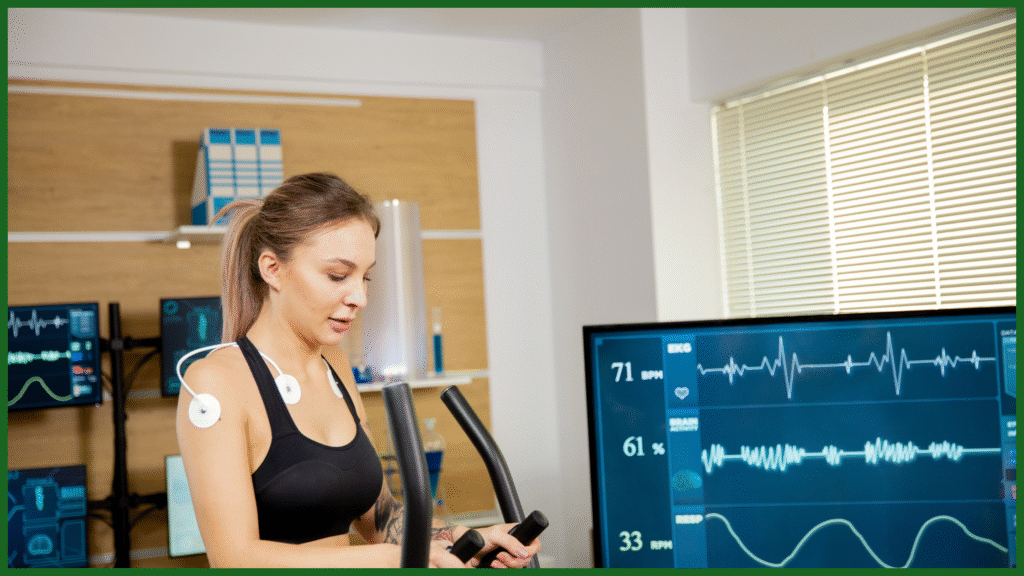
Through regular aerobic exercises, you begin to experience physiological and functional changes which take time before you can measure because your cardiovascular system becomes used to such exercises. These changes are suggestive of stronger heart contractions, improvement of oxygen delivery and metabolic efficiency. An orchestrated aerobic exercise has been discovered to have the potential to improve VO2 max within four to eight weeks, depending on the degree and the current fitness (Ross et al., 2023). Original change may be subtle, but it will have an apparent change in the long run due to frequent training.
Definitive Indications Your Cardio Fitness Is on the Improvement:
- Slow resting heart rate: The heart pumps more blood with each beat and hence we need to take fewer beats in order to rest.
- Quick recovery: The post-exercise recovery rate is increased in the wake of physical exercise.
- Increased stamina: You are capable of working more without becoming out of breath and fatigued.
- Fewer fatigability days: Daily activities such as walking up the stairs are not as strenuous.
- Increased breathing efficiency: You do not feel out of breath doing moderate exercise.
- Greater exercise capacity: You can endure more intensity or more time.
- Healthy blood pressure: Aerobic exercises can be of any kind to keep the blood pressure healthy.
- Improved VO2 max: It becomes more efficient with a few weeks of regular training (Ross et al., 2023).
- Better recuperation between muscle activities: The better the conditioning is the lesser the muscle soreness.
- Increased mental sharpness and good mood: Aerobic exercise assists in the increased mental functioning and stress management.
Safety Considerations
When applied within the scope of personal fitness and health condition, cardiovascular exercise is usually safe. Nevertheless, exercise should be stopped just in case of chest pain, extreme shortness of breath, dizziness, palpitations, unusual sweating or pain in the arm, jaw, or back. Persons with chronic diseases need to seek medical advice before any intense exercise (AHA, 2024). Good hydration, supportive shoes, slow-paced running, and good warm-up and cooling down periods also decrease cardiovascular and musculoskeletal risk.
Conclusion
One of the most effective methods of disease prevention and well-being in the long run is the improvement of cardiovascular health. Intensity is not the defining characteristic of the best exercise for cardio fitness but consistency, safety and sustainability. It has been demonstrated that routine aerobic exercise has a cardiac strengthening effect and enhances oxygen efficiency and cardiovascular risk factors (Ross et al., 2023; HHS, 2024).
It does not matter whether you prefer walking, running, cycling, swimming, rowing, or interval training, long-term follow-up brings about significant changes. Look at progressive development, balanced programming, and health advice in case of need to achieve long-term heart health and stamina.
Frequently Asked Questions
What is the best exercise for cardio fitness?
The cardio fitness exercise is all aerobic exercise and done on a regular basis such as walking, running, cycling, swimming, rowing, or highly structured interval training sessions once a week.
How often should I do cardio exercise?
Adults are to have no less than 150 minutes of moderate-intensity aerobic exercise weekly, or 75 minutes of vigorous activity, distributed in several days regularly.
Is high-intensity interval training safe for everyone?
HIIT works but it might not be applicable to beginners and people with medical problems without medical supervision and progressive advancement.
Can walking alone improve cardiovascular fitness?
Yes it is true that vigorous exercise that is carried out on a regular basis may greatly enhance cardiovascular stamina and decrease the risk of heart disease in case it is done regularly at moderate intensity.
How quickly can cardio fitness improve?
The majority of people feel an increase in endurance and recovery after four to eight weeks with regular aerobic exercise of the right intensity.
Medical Disclaimer
This article is informational in nature and is not meant to substitute medical care. Always consult a medical professional when initiating any new exercise program, particularly when you have heart disease, diabetes, hypertension or any other health issue.
References
- American Heart Association. (2024). American Heart Association recommendations for physical activity in adults. https://www.heart.org/en/healthy-living/fitness/fitness-basics/aha-recs-for-physical-activity-in-adults
- American Heart Association. (2024). Why is physical activity so important for health and well-being? https://www.heart.org/en/healthy-living/fitness/fitness-basics/why-is-physical-activity-so-important
- Ross, R., Blair, S. N., Arena, R., et al. (2023). Importance of assessing cardiorespiratory fitness in clinical practice: A case for fitness as a clinical vital sign. Circulation, 147(18), e739–e750. https://doi.org/10.1161/CIR.0000000000001138
- U.S. Department of Health and Human Services. (2024). Physical Activity Guidelines for Americans (2nd ed.). Office of Disease Prevention and Health Promotion. https://health.gov/our-work/nutrition-physical-activity/physical-activity-guidelines
- Warburton, D. E. R., & Bredin, S. S. D. (2023). Health benefits of physical activity: A systematic review of current systematic reviews. Current Opinion in Cardiology, 38(5), 597–603. https://doi.org/10.1097/HCO.0000000000001045