- Why Having a Workout Routine Matters
- Mental Health Benefits of Regular Exercise
- Best Workout Routines for Weight Loss
- Best Workout Routines for Muscle Gain
- Role of Nutrition in Your Workout Routine
- Best Workout Routines at Home
- Workout Routine for Beginners (Step-by-Step)
- What Is the Most Effective Workout Routine?
- Which Exercise Schedule Is Best?
- Professional Guidance Importance
- Key Takeaway
- Frequently Asked Questions
- References
Anyone desires to lose weight, and the majority of the individuals find it hard to maintain uniformity and achievement. That can be changed by picking the best workout routines. A workout program is a form of strength, endurance, and good health. It has been demonstrated that a healthy exercise routine will lower chronic illnesses and increase overall fitness over time (Booth et al., 2012). This is because, regardless of whether you need to lose or gain, having a smart plan is all you need.
Why Having a Workout Routine Matters
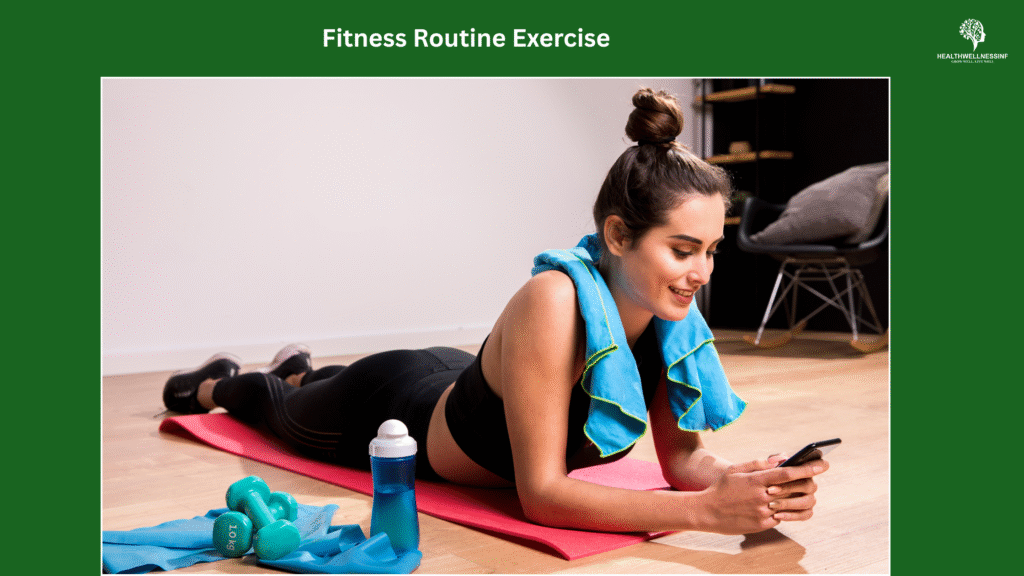
Best workout routines: Exercising is a way to have an active body, maintain muscle activity, and feel better. It also prevents such lifestyle-related diseases as obesity, diabetes, and heart disease (American Heart Association, 2024). Being physically active helps in getting your blood flowing and providing a lot of oxygen that makes you feel more awake and confident. A plan also makes progress, lowers the risk of injury, and assists you to be more or less inspired during your fitness career.

Mental Health Benefits of Regular Exercise
Regular exercise is not only good for your body — it is equally powerful for your mind. Research shows that physical activity reduces symptoms of anxiety, depression, and stress by releasing endorphins, which are natural mood-boosting chemicals in the brain (Sharma et al., 2006).
When you follow a consistent workout routine, you sleep better, think more clearly, and feel more confident in your daily life. Even a 20–30 minute walk can significantly improve your mood and reduce feelings of fatigue.
Exercise also builds mental discipline. Sticking to a schedule, pushing through a tough workout, and seeing gradual progress all strengthen your mindset over time. This mental toughness carries into other areas of life — work, relationships, and personal goals.
For people dealing with stress or low energy, starting with light exercise like yoga, stretching, or a short walk is a great first step. Over time, this builds into a habit that supports both physical and mental wellness.
Best Workout Routines for Weight Loss
To achieve fat loss, you need to balance between cardio training and strength training. Cardio is used to burn calories, whereas strength exercises enhance metabolism and muscle tone. Researchers suggest 150 minutes of moderate or 75 minutes of vigorous exercise per week (CDC, 2023).
The following is a basic, scientifically proven, weight loss plan:
- Monday: 30 minutes brisk walk +15 minutes strength training.
- Tuesday: Rest/light stretching.
- Wednesday: 20 minutes HIIT (High-Intensity Interval Training).
- Thursday: Core and body weight exercise.
- Friday: 30 minutes running or bicycle riding.
- Weekend: Sportive relaxation – swimming, walking, or yoga.
This combination of aerobic and resistance exercise enables your body to use the fat and maintain the slim muscles. In the long run, you will feel that you have better posture, stamina, and energy.
Best Workout Routines for Muscle Gain
Growth of muscles occurs when you give your muscles a challenge and give them time to rest. Compound exercises such as squats, push-ups, and bench press are the most optimal exercises to use in muscle building. These utilise different muscles and increase more general strength (Schoenfeld, 2010).
The weekly schedule may include a balanced plan as shown below:
- Day 1: Chest and triceps- bench press, dips and push-ups.
- Day 2: Back and biceps – pull-ups, rows and curls.
- Day 3: Rest or active recovery
- Day 4: Legs and shoulders – squats, lunges, and shoulder press.
- Day 5: Core – planks, crunches and hanging leg raises.
Proteins and rest are also crucial. The studies indicate that the athletes should use 1.2-2.0 gm of protein per kilogram of body weight to facilitate muscle recovery and growth (Phillips and Van Loon, 2011). Sleeping 7-8 hours improves the performance and hormonal balance as well.
Role of Nutrition in Your Workout Routine
Exercise alone is not enough — what you eat plays an equally important role in your fitness results. Nutrition fuels your workouts, supports muscle recovery, and helps your body perform at its best. Without the right diet, even the most consistent workout routine will show limited results.
Before a workout, eat a light meal rich in carbohydrates and a moderate amount of protein about 1–2 hours before exercising. Good options include a banana with peanut butter, oats with milk, or a whole grain toast with eggs. This gives your body the energy it needs to train effectively.
After a workout, focus on protein and healthy carbohydrates to repair muscles and restore energy. Foods like grilled chicken with rice, Greek yogurt with fruit, or a protein shake are excellent post-workout choices.
Key nutrition tips to follow:
- Drink at least 8–10 glasses of water daily — hydration directly affects performance
- Avoid heavily processed or sugary foods that cause energy crashes
- Include healthy fats like nuts, avocado, and olive oil in your daily meals
- Do not skip meals — especially breakfast if you train in the morning
Research confirms that combining proper nutrition with regular exercise leads to significantly better outcomes in both weight loss and muscle gain (Thomas et al., 2016). Think of food as the fuel and exercise as the engine — both are needed to move forward.

Best Workout Routines at Home
You can get great results even at home where you would love to have your home workouts. There are minimal or no equipment workouts that can be best done at home, employ the weight of the body to work and maintain strength and endurance.
Here’s a simple plan:
- Warm-Up (5 minutes): leg swings, spot jogging and arm circles.
- Workout (20-25 minutes):
- Jumping jacks – 3 sets of 20
- Squats – 3 sets of 15
- Push-ups – 3 sets of 10
- Plank – hold for 30 seconds
- Burpees – 3 sets of 10
Do this drill 4-5 times a week. Home exercises enhance flexibility, save time and are less hard to sustain over time. They work just as well as gym sessions in the case of health and fitness when they are properly done (Nunan et al., 2020).
Workout Routine for Beginners (Step-by-Step)
Starting a workout routine for the first time can feel overwhelming. But the truth is — you do not need expensive equipment or a gym membership to begin. A simple, structured plan is all you need to build a strong foundation.
Here is a beginner-friendly weekly plan:
- Day 1: 20-minute brisk walk + 10 bodyweight squats + 10 push-ups
- Day 2: Rest or gentle stretching (5–10 minutes)
- Day 3: 15-minute light jog + plank hold for 20 seconds + 10 lunges
- Day 4: Rest
- Day 5: Full-body circuit — jumping jacks, squats, push-ups, and plank (2 rounds)
- Day 6: 20-minute yoga or stretching
- Day 7: Complete rest
Key tips for beginners:
- Start slow and increase intensity gradually each week
- Focus on form over speed to avoid injury
- Drink enough water before, during, and after exercise
- Do not skip rest days — recovery is part of the process
Studies show that beginners who follow a gradual progression plan are more likely to stay consistent and avoid burnout (Garber et al., 2011). Even three days of exercise per week can bring visible improvements in energy, strength, and mood within the first month.
What Is the Most Effective Workout Routine?
The best exercise program is the one that you are able to commit to. It has been found out that consistency is more important than intensity in the process of achieving long-term fitness results (Booth et al., 2012). An exercise plan that involves cardio, strength training and recovery days is most effective.
- Doubles up warm-ups and cool-downs to avoid injury.
- Better recovery is achieved by mixing high and low-intensity days.
- Follow up weekly – strength, stamina or measurements.
This moderate exercise enhances stamina, develops a lean body and promotes mental health.
Which Exercise Schedule Is Best?
There is no ideal exercise schedule that fits all people, because the ideal exercise schedule is one that suits your fitness objective. Novices need to strive to have three exercise days per week separated by rest days. Split routines can be followed by intermediate and advanced individuals and they can concentrate on various muscle groups in a day.
Example:
- 3-Day Split: Alternating full-body workouts.
- 5-Day Split: It is based on a muscle group per day.
Rest and rest days are necessary to avoid muscle fatigue and overtraining. Research proves that muscle repair and performance increase with adequate rest (Schoenfeld, 2010).

Professional Guidance Importance
The best workout routines or training can not be achievable without the right form or structure. Professional instructors have the ability to design a program that suits your objectives, monitor your progress and assist in avoiding injury. Under the guidance of an expert, one is assured of the right posture, balanced exercises, and healthy weight gain. In the case of beginners or having health conditions, it is a good idea to refer to a certified trainer or physiotherapist (Nunan et al., 2020).
A certified fitness trainer does more than just count your reps — they assess your current fitness level, identify muscle imbalances, and build a plan that is safe and effective for your specific body. This is especially important if you are recovering from an injury or managing a health condition like back pain, arthritis, or heart disease.
Personal trainers also keep you accountable. Many people struggle with motivation when exercising alone. Having a scheduled session with a professional creates commitment and pushes you to stay consistent even on difficult days.
Online coaching has also made professional guidance more accessible and affordable than ever before. Whether in person or virtual, working with a qualified expert even for just a few sessions can teach you the correct techniques that you carry forward for life.
Investing in professional guidance early saves time, prevents setbacks, and speeds up your results significantly (Ratamess et al., 2008).
Key Takeaway
The optimal exercises are those that involve cardio, strength exercises, flexibility, and rest. A best workout routines must be something that fits your lifestyle, be it losing weight, building the muscles, or exercising at home. Concentrate on stability, balance, and rest. You will not only feel and look healthier and more confident every day, but also with the correct plan and professional help, you will also feel stronger.
Frequently Asked Questions
Which is the best 5 day workout split?
Five days of alternating on various body parts: chest, back, legs, shoulders and arms, will contribute to the most growth of muscles and a rest between them.
Is it possible to gain muscle using only home workouts?
Yes. Bodyweight training that incorporates resistance bands, progressive overload, and resistance bands can be effective to build muscle without going to the gym. Consistency is key.
How long before I see results?
It is not the case that visible results are always achieved after just 6-8 weeks of regular training based on your diet, rest and the intensity of your exercises.
Is it best to do weights then cardio or vice versa?
Both are good, however, cardio following weights is more likely to burn more fat, and still provide muscle energy to train the strength.
References
- American Heart Association. (2024). Recommendations for physical activity in adults. https://www.heart.org
- Booth, F. W., Roberts, C. K., & Laye, M. J. (2012). Lack of exercise is a major cause of chronic diseases. Comprehensive Physiology, 2(2), 1143–1211. https://doi.org/10.1002/cphy.c110025
- Centers for Disease Control and Prevention (CDC). (2023). Physical activity basics. https://www.cdc.gov
- Nunan, D., Mahtani, K. R., & Roberts, N. (2020). Physical activity and exercise: General practice guidance. British Journal of General Practice, 70(695), 399–400. https://doi.org/10.3399/bjgp20X712865
- Phillips, S. M., & Van Loon, L. J. (2011). Dietary protein for athletes: From requirements to optimum adaptation. Journal of Sports Sciences, 29(S1), S29–S38. https://doi.org/10.1080/02640414.2011.619204
- Schoenfeld, B. J. (2010). The mechanisms of muscle hypertrophy and their application to resistance training. Journal of Strength and Conditioning Research, 24(10), 2857–2872. https://doi.org/10.1519/JSC.0b013e3181e840f3
- ]Sharma, A., Madaan, V., & Petty, F. D. (2006). Exercise for mental health. Primary Care Companion to the Journal of Clinical Psychiatry, 8(2), 106. https://doi.org/10.4088/PCC.v08n0208
- Garber, C. E., Blissmer, B., Deschenes, M. R., et al. (2011). Quantity and quality of exercise for developing and maintaining cardiorespiratory, musculoskeletal, and neuromotor fitness in apparently healthy adults. Medicine & Science in Sports & Exercise, 43(7), 1334–1359. https://doi.org/10.1249/MSS.0b013e318213fefb

Haseena Baig, MSc, is a health and nutrition writer at HealthWellnessInf. She holds a Master of Science (MSc) in Biological Sciences (Nutrition) and specializes in nutrition, healthy living, fitness, weight management, and mental wellness.
With a strong academic background in nutrition and health sciences, she is passionate about translating complex health information into practical, evidence-based guidance that readers can easily understand and apply in their daily lives.
At HealthWellnessInf, Haseena researches, writes, and reviews articles covering nutrition, wellness, fitness, sleep health, and natural lifestyle strategies. She is committed to providing reliable information that supports healthier habits and overall well-being.