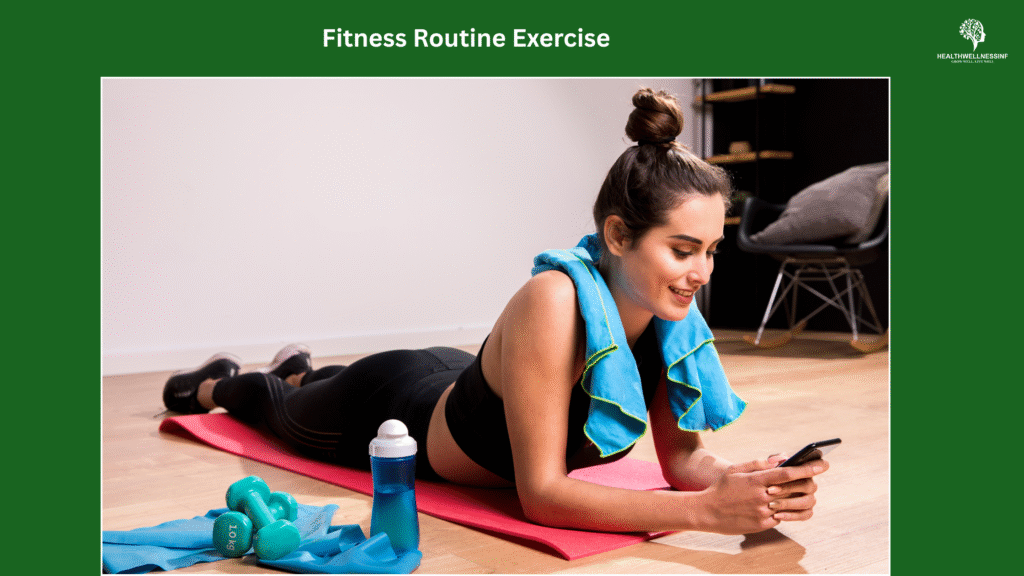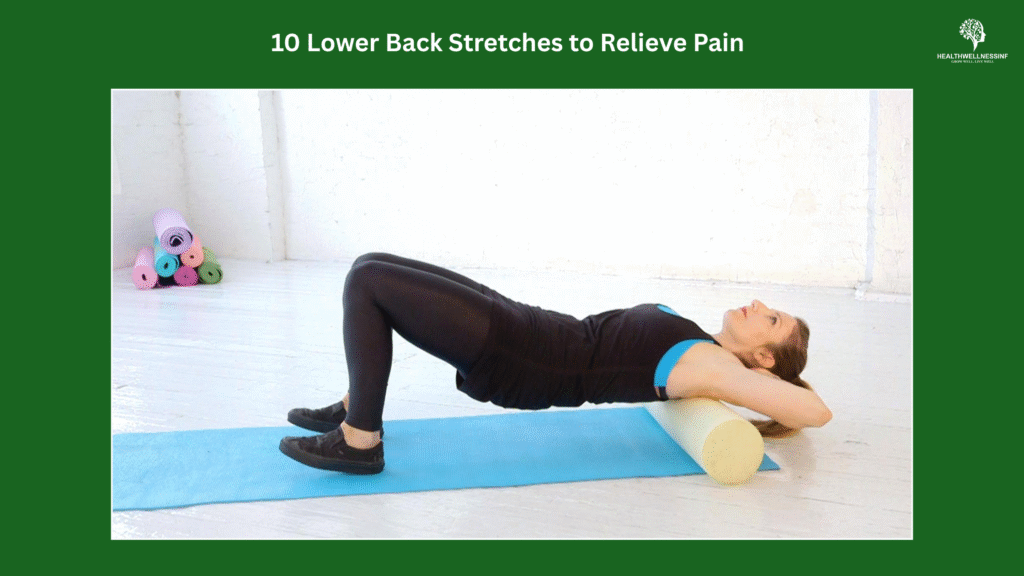
Outdoor fitness is taking the shape of a preference among individuals who desire to have a sustainable and fun means of exercising. Rather than just using the indoor gyms, most people are turning to parks, open spaces and nature in order to carry out their fitness exercise regimen. Such a move is supported by an increasing body of scientific knowledge that outdoor activity can enhance physical and psychological health outcomes.
Outdoor fitness exercises unlike the conventional ones involve movement as well as exposure to the fresh air, sunshine and nature. This combination helps to increase motivation, decrease stress and increase the long-term compliance to exercise patterns. Recent research in the field of public health indicates that people who run outside record greater satisfaction and regularity than those who train in the gym (WHO, 2023).
This guide will inform you of the advantages of outdoor fitness, the best exercises, exercise equipment and safe beginner fitness. The text will be targeted at EEAT and AEO requirements, being precise, credible, and providing the answers to the common questions asked by the users.
What Is Outdoor Fitness?
Outdoor fitness can be described as any organized or unorganized form of physical movement that occurs in an outside area like a park, a trail, a beach or outdoor gyms. It involves cardio exercises, muscle-strengthening exercises, stretching exercises, and functional movement exercises performed outdoors rather than inside the gym.
Outdoor fitness activities may be as easy as walking or more advanced bodyweight workouts with outdoor fitness equipment. The primary benefit is the integration of exercise with the exposure to the environment, which promotes physical fitness and mental health.
Why Outdoor Fitness Is Important for Health
Outdoor fitness is an important aspect of health management in contemporary society since it combats physical inactivity as well as mental stress. Most individuals fail to use gyms because of boredom, expense or time. Outdoor activity eliminates most of these restrictions, by providing a more flexible and inexpensive and interesting alternative.
Moreover, natural settings activate sensory activity, which enhances mood and thinking ability. Green spaces and sunlight have also been associated with the decrease in stress hormones and better emotional control. This is why outdoor fitness is not only an exercise, but a healthy practice that is backed by studies (Twohig-Bennett and Jones, 2018).
Outdoor Fitness Benefits
Outdoor fitness has various health advantages, such as cardiovascular health, decreased stress, elevated mood, increased vitamin D levels, and exercise regimen. It also contributes to social interaction and well being.
1. Improves Mental Health and Reduces Stress
The human brain is soothed by outside surroundings. The levels of cortisol, which is directly related to stress, are lowered as a result of exercising in natural environments. Outdoor fitness exercises also report a decrease in anxiety and stability of mood when compared to indoor exercises.
The production of serotonin that are beneficial in controlling mood and sleep cycles is also enhanced by sunlight exposure. This is why outdoor fitness is particularly helpful to those who have to cope with mild depression or burnout. WHO (2023) confirms that regular exercise and exposure to the open environment have a significant positive impact on the mental health outcome.
2. Enhances Physical Strength and Endurance
Outdoor fitness does not strain the body in the same manner since the terrain is not even, wind does not flow in a straight line, and the weather is not constant. Such factors involve stabilizing muscles and enhancing coordination. Trail running or bodyweight exercises in parks are examples of activities that develop functional strength that aids in everyday activities.
There is no need to train the body to acclimatize to the machines, as with outdoor fitness exercises. This results in better balance, stamina and muscle efficiency with time. Studies indicate that diverse training conditions may boost the general sporting performance (Gladwell et al., 2013).
3. Supports Vitamin D Production and Immunity
Natural production of vitamin D by sun rays is one of the greatest outdoor fitness benefits. Vitamin D is also vital in the health of bones, immune system, and controlling inflammation. Vitamin D deficiency is common among many people because of indoor living.
Moving around in the middle of the day will keep the vitamin D levels healthy, which reduces the chances of bone-related diseases and contributes to the strength of the immune system. Nevertheless, one should moderate the sun and protect the skin in order to prevent any negative consequences (NIH, 2024).
4. Increases Motivation and Long-Term Consistency
Consistency is one of the main challenges to fitness. With outdoor fitness, compliance is automatic since it is both entertaining and exciting. The environment, new surroundings, and open space make exercises appear less monotonous and, therefore, more entertaining.
Research has shown that individuals will exercise long term when they like the environment. This psychological benefit is offered in outdoor environments and therefore fitness routines can be maintained in the long run (Pretty et al., 2005).
5. Encourages Social Engagement and Community Activity
Outdoor fitness usually involves group exercises, sporting activities, or walking groups. These social relationships enhance responsibility and incentive. Working out with other people increases emotional well being as well as decreases feelings of isolation.
The outdoor fitness programs are community-based which explains why they are being increasingly encouraged in the strategies of public health since they provide physical activity along with social support networks.
Best Outdoor Fitness Exercises
Going out during your exercises does not only feel refreshing but can also improve your mood and energy and the general performance. Exercising is no longer a task, but an enjoyable habit because of fresh air and natural environment. Outdoor activities are an easy and efficient method of maintaining physical activity regardless of whether you are an amateur or a professional athlete.
1. Cardio-Based Outdoor Fitness Exercises
Cardio activities are necessary to take care of the heart and burn calories. Road activities like running, cycling, and brisk walking are also effective in cardiovascular training and make the activities interesting and dynamic. Running in the parks or trails enhances stamina and breathing capacity. Biking improves the lower body muscles but provides the benefits of low impact cardio. All the levels of fitness are appropriate to take such exercises and can be easily tuned in terms of intensity.
2. Strength Training Without a Gym
Outdoor fitness enables efficiency in strength training with the help of body weight and little equipment. The workouts such as squats, push-ups, lunches, and pull-ups can be done in parks on benches or bars. This kind of training develops functional strength and enhances muscle coordination. It also eliminates the need to subscribe to costly gym subscriptions and also achieves good outcomes.
3. Flexibility and Recovery Workouts
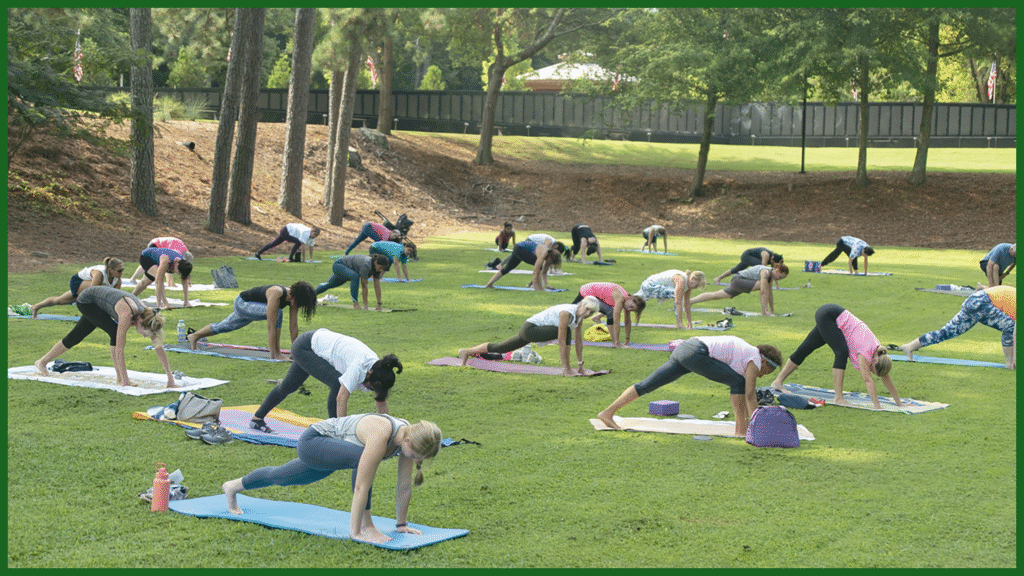
Flexibility is a factor that is ignored in exercising. Stretching and outdoor yoga practices can be used to enhance mobility and limit injuries. Yoga in natural conditions improves relaxation and mindfulness. Stretching exercises also enhance oxygen circulation and clarity of mind since breathing new air helps to make the recovery sessions more effective.
4. Functional Training for Daily Strength
Activity Outdoor fitness exercises are functional such that they resemble real life activities like lifting, climbing or stepping. These consist of climbing stairs, step-ups, and exercise on resistance bands. Exercising with exercise bands and fitness equipment in the outdoor setting will introduce resistance without the use of heavy equipment. This renders exercises generic and appropriate to both novices and experts.
Outdoor Fitness Equipment Guide
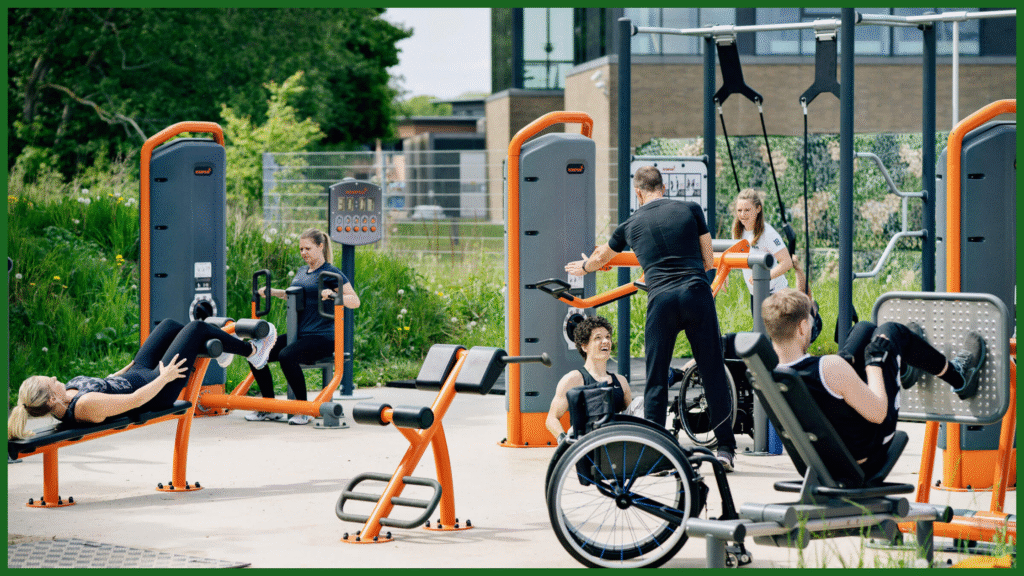
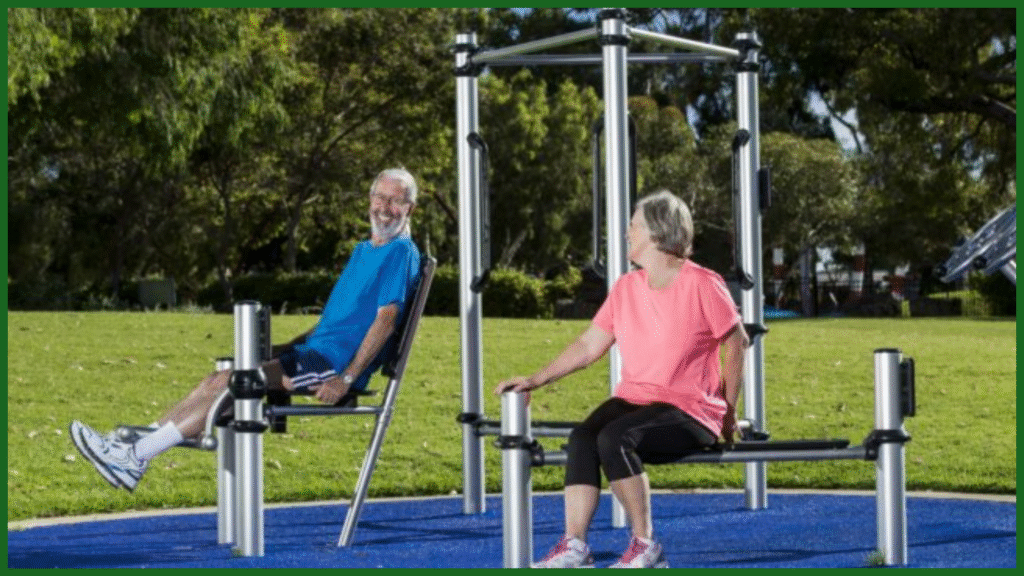
Outdoor fitness equipment which adds variety and advancement to the workout. Parks commonly have in-built stations that are used to train on strength and mobility. Such portable fitness equipment as resistance bands is very effective due to their lightness, low price, and versatility. They enable the users to do various workouts that focus on various body parts. There are also those who use kettlebells or weighted vests to increase resistance. These aid in enhancing the intensity of workouts and contribute to building of muscles.
How to Start Outdoor Fitness Safely
These steps will decrease the risk of injury and make the fitness process sustainable. In order to engage in outdoor fitness, it is necessary to take the following steps:
Select an outdoor place of safe and clean environment like a park or a track.
- Light exercises such as walking or stretching should be started.
- Dress and wear well-suited shoes.
- Keep hydrated pre-workout, during and post-workout.
- Moderate temperatures should be used and extreme weather avoided when exercising.
- Always have warm up and cool down sessions.
Outdoor Fitness vs Indoor Fitness
Outdoor fitness refers to the practice of fitness that takes place in the natural surroundings such as the park, which provides clean air, diversity and cheap physical exercises that enhance the physical and mental health. Indoor fitness is conducted within controlled settings such as gyms where sophisticated equipment, consistency and programmed courses are offered towards a specific fitness objective.
These are both good and the best alternative option is based on what a person prefers, desires to improve their fitness and whether the person needs flexibility or convenience and specialized equipment.
| Feature | Outdoor Fitness | Indoor Fitness |
| Environment | Natural, fresh air, changing scenery | Controlled, climate-regulated environment |
| Cost | Usually free or low cost | Requires gym membership or equipment |
| Motivation | Higher due to variety and outdoor setting | Can become repetitive over time |
| Equipment | Limited but flexible (bands, bars, bodyweight) | Wide range of machines and weights |
| Air Quality | Fresh and natural air | Artificial ventilation |
| Weather Impact | Affected by weather conditions | Not affected by weather |
| Accessibility | Parks, trails, open spaces | Gym access required |
| Social Interaction | Group activities and community workouts | Limited or structured classes |
| Safety Control | Less controlled environment | Safer and monitored settings |
| Best For | Mental wellness, variety, flexibility | Structured training and muscle building |

Common Mistakes to Avoid
- Saving on warm-up and cool-down which exposes one to higher risks of injuries.
- Lack of hydration prior to and during physical activities, which result in fatigue and poor performance.
- Working in extreme conditions without taking necessary care.
- When performing outdoor fitness exercises, the wrong form of the exercise may strain the body or cause injury.
- The training that is overtraining in the sense that there is no rest and recovery.
- Advancing rather than increasing intensity and duration slowly.
- Failure to put on appropriate footwear or dress according to outdoor weather.
Conclusion
Outdoor fitness is an effective, practical and fun method of enhancing overall health. It includes physical activity in combination with the psychological advantages of nature and is a potent instrument of long-term health. With the use of outdoor fitness exercises, you can be able to improve on your strength, decrease stress levels and be consistent without the need to spend a lot of money on expensive facilities. Through appropriate planning and safety, outdoor fitness could be made a sustainable form of lifestyle to promote physical and mental wellbeing
Medical Disclaimer
The article is informational and should not substitute the medical advice of a professional. Ask a professional before entering into any new fitness program.
Frequently Asked Questions
Which are the key advantages of outdoor fitness?
Outdoor exercise is more beneficial than indoor exercise because it improves mental health, cardiovascular resilience, vitamin D, stress relief, mood elevation, and long-term exercise adherence due to the use of interesting and pleasant natural settings.
Is outdoor fitness equipment necessary?
Fitness outdoors needs no equipment because most exercises utilize body weight. Nevertheless, such tools as resistance bands, pull-up bars, and park gym stations can also be used to make the workouts more varied and effective.
Are beginners safe to use outdoor fitness?
Fitness can be done outdoors and as a beginner as long as it is initiated at a slow pace. Start with light exercises such as walking or stretching, use of good shoes, hydrate and avoid exposure to extreme weather to minimize the risk of injury.
What are the frequency of outdoor fitness exercises?
Adults ought to take at least 150 minutes of moderate fitness outdoor exercise per week. It can involve a walk, cycling, or strength training, which can be distributed over a number of days to ensure regular health benefits (WHO, 2023).
References
- Gladwell, V. F., Brown, D. K., Wood, C., Sandercock, G. R., & Barton, J. L. (2013). The great outdoors: How a green exercise environment can benefit all. Extreme Physiology & Medicine, 2(1), 3. https://doi.org/10.1186/2046-7648-2-3
- National Institutes of Health. (2024). Vitamin D fact sheet for health professionals. https://ods.od.nih.gov/factsheets/VitaminD-HealthProfessional/
- Pretty, J., Peacock, J., Sellens, M., & Griffin, M. (2005). The mental and physical health outcomes of green exercise. International Journal of Environmental Health Research, 15(5), 319–337. https://doi.org/10.1080/09603120500155963
- Twohig-Bennett, C., & Jones, A. (2018). The health benefits of the great outdoors. Environmental Research, 166, 628–637. https://doi.org/10.1016/j.envres.2018.06.030
- World Health Organization. (2023). Physical activity guidelines. https://www.who.int/news-room/fact-sheets/detail/physical-activity