
- Why Mental Health Support is Essential for Teenagers
- Common Mental Health Challenges in Adolescents
- Types of Evidence-Based Mental Therapies for Teens
- Benefits of Early Mental Health Therapy for Teens
- How Parents Can Support Teens in Therapy
- When to Seek Professional Help
- Conclusion
- Frequently Asked Questions
- References
The adolescent stage is an important emotional, psychological, and social stage. Adolescents are undergoing serious brain reorganizations and an increasing environmental stress at this time. Emotional stress may be augmented by academic demands, exposure to social media, peer pressure, and family aspects. Such issues can be some of the causes of anxiety, depression, and behavioral problems in teens.
Good mental therapies for teens at an early age can enhance emotional stability and mental health in the long-term. Evidence-based treatments assist teenagers in building coping mechanisms, emotional control, and strength at this delicate age. The studies show that symptom reduction and functional school, relationship, and daily life improvements can be achieved with the help of structured therapy programs (World Health Organization, 2023).
Why Mental Health Support is Essential for Teenagers
The issues of teen mental health have grown on the international level throughout the past ten years. Some of the most prevalent problems in adolescents nowadays include anxiety disorders, depression, and challenges associated with emotional regulation. The brain of adolescents experiences significant neurological growth, especially in areas that deal with impulse control systems, emotional processing systems, and decision making systems. Such a biological transition is more susceptible to stress and emotional instability in teenagers. Early referral of mental therapies for teens enables the adolescents to form healthy coping styles before issues get out of control.
Mental health complications in adulthood can also be avoided through psychological treatment. Global mental health reports indicate that almost every seventh adolescent has a mental health disorder. A significant proportion of teens, however, are not treated because of stigma, ignorance or insufficient access to care (WHO, 2023).
Professional therapy offers a secure space within which the teenagers are able to express themselves without being judged. Evidence-based treatment approaches assist in detecting the negative thinking patterns and substituting these with healthier views (American Psychological Association, 2024).
Common Mental Health Challenges in Adolescents
Learning about the frequent adolescent mental health issues can enable families to see when the therapy can be needed. The nature of emotional problems in adolescence may be varied and is determined by personality and the surrounding environment as well as biological influences. The most commonly diagnosed teenager’s condition is anxiety disorder. These disorders can include over worrying, panics or social phobia.
Depression is another disorder, which occurs in many teenagers and is commonly characterized by the absence of motivation, constant sadness, sleepiness and poor performance in school. Such behavioral disorders as attention-deficit hyperactivity disorder and conduct disorder can also develop in teenage life.
Mental concerns may also be exacerbated by social media exposure and cyber bullying. Identity development and self-esteem is also another problem that many teenagers face in adolescence. The mental therapies for teens may be handled with professional that includes organised psychological support and coping mechanisms (Centers for Disease Control and Prevention, 2024)
Types of Evidence-Based Mental Therapies for Teens
Various treatment methods deal with certain emotional and behavioral problems. The choice of treatment may be considered very individual as regarded by mental health professionals depending on their diagnoses.
Cognitive Behavioral Therapy (CBT)
One of the most studied and popular mental therapies in teens is Cognitive Behavioral Therapy. This is a strategy that emphasizes on the detection of maladaptive thinking patterns that affect behaviors and emotions. Adolescents get to know how such negative thinking influences their responses to stressful experiences. CBT assists adolescents to substitute distorted thinking with a balanced and realistic thinking.
Common practice skills that therapists teach include problem solving, emotional regulation, and behavioral activation. The lessons can feature work sheets, setting of goals, and organized activities that target the teens. Studies have always indicated that CBT is very effective in the treatment of anxiety disorders, depression, and stress-related disorders in adolescents. The positive results can be expected after twelve-two therapy sessions in case of structured systems of treatment (Weisz et al., 2024).
Dialectical Behavior Therapy (DBT)
Another effective mental therapy among mental therapies for teens is the Dialectical Behavior Therapy, especially the one dealing with emotional regulation problems. DBT was initially created to be used with patients who have severe emotional responses or self-harming behavior. The treatment is involved in the instruction of four main skills, namely mindfulness, emotional regulation, distress tolerance, and interpersonal effectiveness.
Adolescents are taught how to control their overwhelming emotions without indulging in destructive ways. DBT programs may consist of individual therapy and group skills training programs. The parents can also be involved in a bid to strengthen the coping strategies at home. According to clinical studies, DBT has a great impact on the symptoms of emotional instability, self-harmful behavior, and suicidal thoughts among adolescents (Linehan and Wilks, 2023).
Family Therapy
Family therapy is considered to be the most frequently recommended in case adolescent mental health issues are connected with family dynamics or communication problems. This is a method which acknowledges the role of the family system where teenagers exist and affect emotional development. Therapists will identify how to work with teenagers and family members to enhance communication and conflict resolution. Meetings are aimed at developing relationships and getting to know the point of view of each individual.
Family therapy can be used to deal with parenting style, emotional support, and family stress that influence the well being of the adolescents. There are indications that family-based interventions will enhance the results of teens with depression, anxiety, or behavioral problems. Family support can be used in collaboration with the teenagers to make them feel heard and supported throughout the treatment process (AACDP, 2023).
Interpersonal Therapy for Adolescents (IPT-A)
Another professionalized type of mental therapy for teens is Interpersonal Therapy of Adolescents which is particularly effective in cases of depression. This model is relationship-based and social functioning centered. A lot of teenage emotional distress is related to peer relations, family discord, or transitioning to adulthood. IPT-A assists teenagers in realizing interpersonal stressors that are the cause of emotional distress.
Therapists also help adolescents to communicate better, express feelings and conflict with peers or family members. The treatment is typically twelve to sixteen sessions and based on a systematic approach to the therapy. Research indicates that IPT-A may be an effective intervention in the depression of adolescents and enhance relationships skills (Mufson et al., 2023).
Mindfulness-Based Therapies
Over the past years, mindfulness-based practices have become the focus of attention as supportive mental therapies for teens. These treatments are the ones that educate teenagers to direct attention to the present without passing judgment. Breathing exercises, meditation and body awareness could be considered mindfulness practices.
Teenagers are taught to be able to notice thoughts and feelings, and not to act on the spur of the moment. Such consciousness is able to lessen anxiety and emotional responsiveness. Mindfulness-based interventions in schools and therapy programs are becoming more widely incorporated in adolescent mental health interventions. The studies suggest that mindfulness training can alleviate the stress level, anxiety symptoms as well emotional dysregulation among teenagers (Keng et al., 2024).
Benefits of Early Mental Health Therapy for Teens
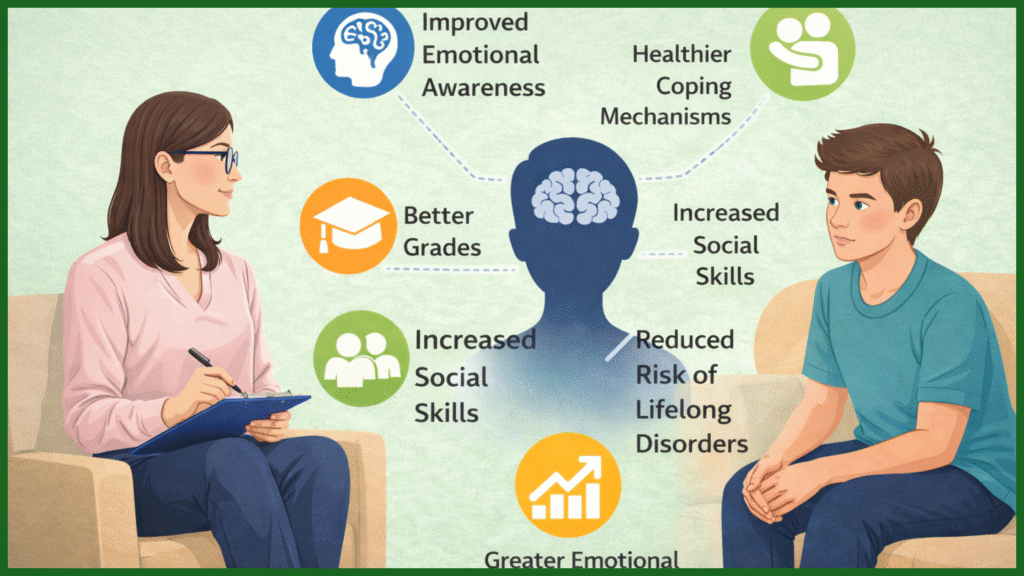
Premature availability of mental therapies for teens offers both short term and long term benefits on the health of adolescents. Key benefits include:
- Improved emotional awareness: Therapy teaches the teenagers how to be aware and understand their feelings at a complicated developmental phase.
- More healthy coping mechanisms: Adolescents are taught important coping skills which enable them to cope with stress, anxiousness, and emotional difficulties.
- Better grades: It is less emotional distress that makes teenagers focus more and get more motivated in school.
- Increased social skills: Therapy enables teens to interact better and establish better friendships and relationships.
- Reduced risk of lifelong disorders: Early intervention lowers the chances of the development of chronic mental disorders in adulthood.
- Greater success in recoveries: It has been demonstrated that early treatment increases recovery outcomes and decreases the intensive care requirement (National Institute of Mental Health, 2024).
- An increased level of emotional resilience: The adolescents acquire problem-solving capabilities and emotional awareness which contribute to later psychological health.
How Parents Can Support Teens in Therapy
Parents and other caregivers are very vital in helping the teenagers who are undergoing mental health treatment. Developing a hospitable home setting contributes to a better outcome of the therapy. Open communication will help the teenagers to communicate their feelings and experiences without the fear of being criticized.
Parents are expected to be active listeners who should not dismiss emotive issues. Treatment progress is also encouraged through encouraging regular attendance of therapy sessions. Family participation could also involve learning of coping mechanisms by therapists. Confidentiality is also to be respected since teenagers require some privacy in the course of therapy. Patience and empathy on the part of parents help the adolescents feel free to participate in treatment. Mental therapies for teens become more effective when families and therapists collaborate (AACAP, 2023).
When to Seek Professional Help
There are numerous emotional transitions that are typical during adolescence. Nevertheless, there are some indicators of professional mental health requirements. Continuous depressive mood over a number of weeks can be an indication of depression. Extreme anxiety disrupting school or social life should also be paid attention to. Behavior, sleeping and eating habits can be changed suddenly pointing to emotional distress. Another warning sign is withdrawal or loss of friends or activities.
Thoughts or actions of self-harm must be assessed by the professional. Professional consultation can also be completed early with a licensed mental health professional who can help define whether or not the therapy is required. Early help enables the teenagers to get relevant mental therapies for teens before the situation is aggravated (NIMH, 2024). These parents need to contact professional psychologists, psychiatrists or licensed therapists with experience in the field of adolescent mental health.
Conclusion
Adolescence is a period of transition which influences emotional development and mental health in the long term. There are academic pressures, social stresses, and identity issues that teenagers have to deal with at the same time. Such experiences may cause emotional distress and this will need professional assistance. Mental therapies for teens are evidence-based and offer systematic tools to assist in coping with depressions emotions, building relationships, and resilience. Such methods include Cognitive Behavioral Therapy,
There is high research support on Dialectical Behavior Therapy, family therapy, interpersonal therapy, and mindfulness interventions. Early mental health intervention would greatly add to the longer-term health and would help avoid severe psychological challenges during adulthood. Parents, caregivers, educators and healthcare professionals also have a significant role of raising awareness of adolescent mental health. The ability to overcome life challenges with confidence and emotional balance is a critical skill that teenagers can acquire once they are supported through compassion and receiving professional help (WHO, 2023).
Medical Disclaimer
The article is educational and informational in nature. It is not an alternative to professional medical advice, diagnosis, or treatment. Personal care should always be obtained with a qualified mental health professional.
Frequently Asked Questions
What are the most effective mental treatments of teens?
Cognitive Behavior Therapy, Dialectical Behavior Therapy, Interpersonal Therapy, family therapy, and mindfulness-based interventions are some of the evidence-based approaches to treating teens and assist them in coping with emotions and building healthy coping strategies.
How long is the average period of treatment in teenagers?
The length of the therapy is determined by the mental illness and the mode of treatment. Most teenage structured therapy programs tend to take 12- 20 sessions.
Will therapy be effective with anxious and depressed teens?
Yes. Psychological therapies have shown effectiveness in alleviating the signs of anxiety and depression in adolescents through the use of coping skills, emotional control methods and more healthy thinking and living.
Are parents involved in the teen therapy?
In other instances, parents or caregivers are involved in the therapy sessions particularly in family therapy. Their participation will enhance communication, emotional support, and reinforcement of coping strategies at home.
References
- American Academy of Child & Adolescent Psychiatry. (2023). Family therapy for children and adolescents. https://www.aacap.org
- American Psychological Association. (2024). Clinical practice guideline for the treatment of depression across populations.
https://www.apa.org/depression-guideline - Centers for Disease Control and Prevention. (2024). Youth risk behavior surveillance — United States. https://www.nimh.nih.gov/health/topics/child-and-adolescent-mental-health
- Keng, S. L., Smoski, M. J., & Robins, C. J. (2011). Effects of mindfulness on psychological health: A review of empirical studies. Clinical Psychology Review, 31(6), 1041–1056. https://doi.org/10.1016/j.cpr.2011.04.006
- Linehan, M. M., & Wilks, C. R. (2023). The course and evolution of dialectical behavior therapy. American Journal of Psychotherapy. https://doi.org/10.1176/appi.psychotherapy.20230014
- Mufson, L., Dorta, K., & Wickramaratne, P. (2023). Interpersonal psychotherapy for depressed adolescents. Journal of the American Academy of Child & Adolescent Psychiatry.
https://doi.org/10.1016/j.jaac.2023.02.018 - National Institute of Mental Health. (2024). Adolescent mental health statistics and treatment approaches.
https://www.nimh.nih.gov/health/statistics - Weisz, J. R., Bearman, S. K., & Ugueto, A. M. (2024). Evidence-based psychotherapies for children and adolescents. Annual Review of Clinical Psychology.
https://doi.org/10.1037/a0040360 - World Health Organization. (2023). Adolescent mental health fact sheet.
https://www.who.int/news-room/fact-sheets/detail/adolescent-mental-health